Liquidation Pallets For Sale
Sourcing and Flipping Multi-Cookers: The Reseller’s Complete Guide to Electric Pressure Cooker Inventory
Oct
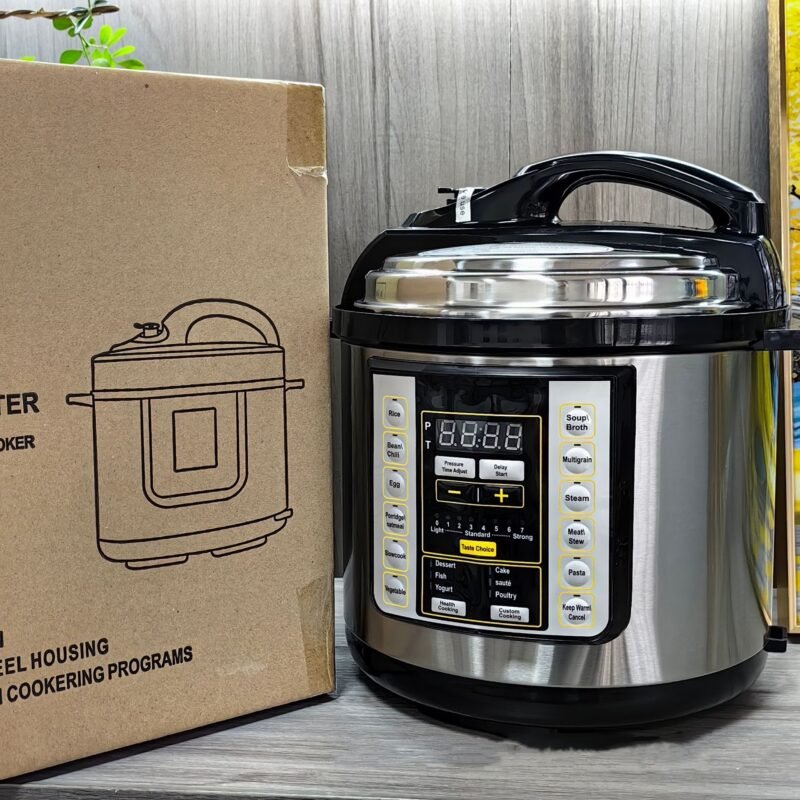
Small kitchen appliances represent one of the most liquid, fast-turning segments in retail inventory arbitrage. Among countertop electrics, programmable multi-cookers and electric pressure cookers hold a unique position: they maintain steady year-round consumer demand, feature high brand-name recognition (Instant Pot, Ninja Foodi, Crock-Pot Express, Cuisinart), and command strong second-hand prices.
However, purchasing liquidation lots of kitchen electrics without a rigorous inspection and refurbishment protocol is a fast way to lose money on unmanifested returns. When you buy electric pressure cooker pallets or case packs, success depends entirely on condition triage, safety testing, and knowing which units are worth refurbishing versus stripping for parts.
This operational guide details the unit economics of wholesale multi-cooker lots, a step-by-step bench testing process, common error codes, and how to structure your multi-channel sales strategy for maximum ROI.
1. Unit Economics: Wholesale Lot Financial Breakdown
To build a sustainable resale operation, your purchasing decisions must be driven by data rather than retail MSRP. Multi-cookers generally arrive in three sourcing conditions: Factory Overstock (New in Box), Shelf Pulls / Damaged Box, and Customer Returns.
Below is a unit-level margin analysis based on a standard 24-unit manifested small appliance pallet featuring mixed multi-cookers and electric pressure cookers sourced via Liquid Pallets Hub:
Unit Economics Model (24-Unit Mixed Pallet)
| Product Classification | Qty | Avg. Retail MSRP | Condition Tier | Processing & Parts Cost | Target Resale Price | Total Gross Revenue |
|---|---|---|---|---|---|---|
| 8-Qt Smart Wi-Fi Pressure Cooker | 4 | $179.99 | Grade A (Open Box / Complete) | $0.00 (Sanitize only) | $110.00 | $440.00 |
| 6-Qt 9-in-1 Multi-Cooker (Standard) | 8 | $119.99 | Grade A/B (Missing manual/rack) | $4.50 (Generic rack) | $70.00 | $560.00 |
| Air Fryer + Pressure Cooker Combo | 4 | $199.99 | Grade B (Scuffed lid / working) | $0.00 (Deep clean) | $115.00 | $460.00 |
| Compact 3-Qt Pressure Cooker | 4 | $79.99 | Grade A (Shelf pull) | $0.00 (Box wear only) | $48.00 | $192.00 |
| Missing Gasket / Float Valve Unit | 3 | $99.99 | Grade C (Incomplete safety seal) | $6.00 (Silicone ring + valve kit) | $55.00 | $165.00 |
| Salvage / Internal Board Fault | 1 | $129.99 | Grade D (Defective heating plate) | $0.00 (Parted out on eBay) | $38.00 (Pot + Lid only) | $38.00 |
| TOTALS | 24 | $3,079.76 | 95.8% Functional Yield | $54.00 Total Parts | — | $1,855.00 |
Net Margin & Profitability Summary:
text[ Financial Breakdown ]
  ├── Total Lot Cost (at $22/unit wholesale):       $528.00
  ├── Inbound LTL Freight Allocation:               $145.00
  ├── Sourced Replacement Parts (Gaskets/Valves):   $54.00
  ├── Average Marketplace & Merchant Fees (12%):     $222.60
  └── Total Invested Capital:                       $949.60

[ Net Return ]
  ├── Gross Resale Value:                           $1,855.00
  ├── Total Investment:                             -$949.60
  └── NET PROFIT:                                   $905.40 (95.3% Net ROI)
If you want to secure consistent wholesale manifests with verified itemization, review our current inventory to buy bulk electric pressure cookers and add high-margin small appliances to your store catalog.
2. The 5-Step Bench Testing Protocol for Resellers
Because pressure cookers operate under elevated pressure (typically 10.15 to 11.6 psi / 70 to 80 kPa) and internal steam temperatures exceeding 240°F (115°C), safety testing is both a liability imperative and a quality requirement. Testing also protects your merchant accounts against “Item Not as Described” claims.
Follow this systematic testing workflow for every incoming unit:
textUnbox & Visual Check ──> Valve & Gasket Inspection ──> Resistance / Continuity Test ──> Steam Water Test ──> Clean & Grade
text           +--------------------------------------------------+
           |                STEP 1: VISUAL INTAKE             |
           | Inspect power cord, outer body, inner base well  |
           +-------------------------+------------------------+
                                     |
                                     v
           +--------------------------------------------------+
           |             STEP 2: SAFETY LID CHECK             |
           | Check silicone seal, float valve & anti-block    |
           +-------------------------+------------------------+
                                     |
                                     v
           +--------------------------------------------------+
           |             STEP 3: ELECTRICAL BENCH             |
           | Check multimeter continuity on heating base plate|
           +-------------------------+------------------------+
                                     |
                                     v
           +--------------------------------------------------+
           |            STEP 4: 500ML WATER STEAM TEST        |
           | Confirm pressure lock, valve seal & auto-venting |
           +-------------------------+------------------------+
                                     |
                                     v
           +--------------------------------------------------+
           |             STEP 5: GRADE & CHANNEL ROUTE        |
           | Grade A (Open Box) | Grade B (Used) | Salvage     |
           +--------------------------------------------------+
Step 1: Physical Housing & Inner Well Inspection
- Remove the inner cooking pot and inspect the aluminum heating element plate located in the bottom of the base. If the plate is dented, warped, or caked with burnt food spills, thermal transfer will be uneven, potentially triggering premature overheating shutdowns.
- Inspect the polarized power plug and removable cord assembly. Ensure the prongs are straight and the rubber housing is intact.
Step 2: Critical Pressure-Sealing Components
A missing or degraded seal is the primary reason customers return multi-cookers under the assumption that they are defective. Inspect four critical lid components:
- Silicone Sealing Ring: Must be pliable, tear-free, and seated firmly in the metal rack channel. Stiff, discolored, or stretched rings will fail to hold pressure.
- Float Valve & Silicone Cap: The small metal pin on the lid must drop freely when depressurized and lift smoothly to seal. Verify that the tiny silicone retaining cap on the underside is present.
- Anti-Block Shield: The perforated metal cap beneath the steam release valve prevents food debris from clogging the vent. It should snap on and off cleanly.
- Steam Release Handle: Verify that the weight or toggle switches smoothly between the “Sealing” and “Venting” positions.
Step 3: Electrical Resistance and Sensor Verification
For units that fail to turn on, use a standard digital multimeter set to Ohms (Ω) to diagnose the internal circuit:
- Unplug the unit, access the bottom service cover, and test the inline thermal fuse. If you get an open circuit (infinite resistance), the fuse blew due to an over-temperature event. Replacing this $1.50 fuse can fully restore an otherwise dead unit.
- According to consumer safety standards outlined by the Underwriters Laboratories (UL 136), electric pressure cookers rely on redundant thermal cutoff switches. Never bypass a thermal fuse; always replace it with a factory-rated equivalent (typically 142°C to 172°C depending on model specs).
Step 4: The 15-Minute Functional Water Test
Never list an electric pressure cooker without performing a live pressure cycle:
- Pour 2 cups (500 ml) of water into the stainless steel inner pot.
- Lock the lid into place (confirm the audible chime activates on digital units).
- Set the machine to High Pressure for 5 minutes.
- Observe the behavior: Steam should vent lightly around the float valve for 2–4 minutes until the valve pops up and seals completely.
- Verify that the countdown timer begins once full operational pressure is achieved.
- Once the cycle finishes, let the machine stay in “Keep Warm” mode for 5 minutes, then execute a manual quick release to confirm smooth valve movement.
textExpected Water Test Timeline:
00:00 - Machine On / Preheating
03:30 - Float valve begins floating, light steam exhaust
05:15 - Float valve pops up completely (System Sealed)
06:00 - Pressure target reached -> Digital countdown starts
11:00 - Beep alerts cycle completion -> Automatic Keep Warm active
3. Decoding Common Error Messages: Triage Cheat Sheet
When processing raw customer return pallets, units frequently display digital error codes that indicate minor, easily fixable issues rather than mechanical failures:
| Error Display Code | Common Root Cause | Quick Fix / Resolution for Resellers |
|---|---|---|
| “Burn” / “OvHt” / “Food Burn” | Starch buildup on bottom of inner pot or warped pot base. | Clean inner pot with Bar Keepers Friend; ensure heating element is clear of debris. |
| “no Lid” / “Lid” | Lid position sensor misaligned or magnetic lid switch failed. | Verify lid is fully rotated to closed position; clean magnetic contact housing. |
| “C6” / “C6H” / “E4” | Pressure sensor switch calibration drift or faulty high-pressure sensor. | Open bottom base cover and clean oxidation off the pressure sensor contact points. |
| “C1” / “C2” / “E1” / “E2” | Bottom temperature sensor open circuit or shorted thermistor. | Check sensor wire harness connection to main logic control board. |
| No Display / Completely Dead | Blown thermal cutoff fuse or loose input power connection. | Test inline thermal fuse with multimeter; replace fuse assembly ($1.25 cost). |
4. Value-Add Refurbishing: Low-Cost Parts, High-Yield Pricing
Missing accessories are standard with customer return lots. Investing a small amount of capital into replacement accessories directly raises your listing tier from “Salvage / Incomplete” to “Grade A / Ready-to-Use”:
text[ Reconditioning Value Engine ]
  ├── Base Purchase Cost (Incomplete Unit):        $22.00
  ├── Universal Sealing Ring (Bulk pack cost):     +$1.20
  ├── Replacement Float Valve + Gasket:            +$0.80
  ├── Universal 3-Prong Power Cord:                +$2.50
  └── Total Reconditioned Unit Cost:               $26.50
       └── Market Value (Complete / Tested):       $69.99 (Net Profit: $43.49)
- Where to Source Replacement Parts: Generic silicone gasket sets, float valves, and anti-block caps can be bought in bulk packs from commercial wholesale distributors for less than $2.00 per unit set.
- Cleaning Stainless Steel Inner Pots: Remove cloudy mineral deposits or heat discoloration (rainbowing) inside the inner cooking pot by boiling 1/2 cup of white vinegar and water for 5 minutes, or scrubbing with a dash of oxalic acid cleanser. An inner pot that looks brand-new can increase resale value by $15–$25.
5. Multi-Channel Sales Matrix: Where to List for Maximum Profit
To turn your inventory quickly and keep working capital moving, distribute your stock across multiple sales channels based on product condition and packaging completeness:
text┌────────────────────────────────────────────────────────────────────────┐
│                        SALES CHANNEL ROUTING                           │
├──────────────────────────┬────────────────────────┬────────────────────┤
│ Inventory Tier           │ Recommended Channel    │ Sales Strategy     │
├──────────────────────────┼────────────────────────┼────────────────────┤
│ Factory Sealed / NIB     │ Amazon Renewed / eBay  │ List near MSRP     │
│ Complete Open-Box        │ eBay / Mercari         │ Full-funnel photos │
│ Minor Scuffs / Incomplete│ Facebook Marketplace   │ Local cash sales   │
│ Damaged Base / Salvage   │ eBay Parts Breakdown   │ Strip pot/lid/PCB  │
└──────────────────────────┴────────────────────────┴────────────────────┘
- Online Marketplaces (eBay, Mercari, Poshmark):
- Best suited for: Complete, pristine units and factory overstock.
- Listing Best Practice: Always include a photo of the inner cooking pot and an image of the machine powered on during the water steam test. State explicitly: “Bench tested, fully pressurized, sanitized, and sealed.”
- Local Direct-to-Consumer Channels (Facebook Marketplace, OfferUp, Flea Markets):
- Best suited for: Units missing original packaging, models with minor exterior housing dents, or heavier combo multi-cooker fryers (which cost $25–$40 to ship across carrier zones).
- Pricing Tip: Price items at a flat 30% to 50% discount compared to retail big-box pricing to generate rapid same-day cash sales.
- The Salvage Strategy (Part Harvesting):
- If a multi-cooker has a cracked chassis, a blown mainboard, or a damaged heating base, do not throw it away.
- Genuine stainless steel inner pots consistently sell for $20 to $35 on eBay.
- Complete lid assemblies sell for $25 to $40.
- Condensation collectors and power cords sell for $8 to $12.
- Parting out a non-functional unit often yields $50+ in gross revenue, easily recovering your baseline pallet purchase cost.
Frequently Asked Questions (FAQs)
Are electric pressure cookers safe to sell after being returned to retail stores?
Yes, provided you conduct an electrical continuity check and a functional steam water test to confirm that safety valves, lid locks, and auto-shutoff sensors work properly. Never sell a unit with a bypassed safety sensor or a severely damaged outer casing.
What is the average failure rate on small kitchen appliance liquidation pallets?
On raw, unmanifested customer return truckloads, expect an average 10% to 15% physical or functional defect rate. Manifested overstock or shelf-pull lots typically maintain a defect rate below 3% to 5%.
How do I ship pressure cookers without the original retail packaging?
Place the inner pot inside the base with cardboard or bubble wrap between the heating plate and the pot. Secure the lid in the locked position, wrap the entire unit in at least two layers of heavy-duty 5/16″ bubble wrap, and use a heavy-duty box with at least 2 inches of packing peanuts or air pillows on all sides.
Build Your Small Appliance Resale Inventory
Sourcing fast-moving, high-margin kitchen electrics is an effective way to grow your resale business. At Liquid Pallets Hub, we provide verified manifests, clean sourcing pipelines, and truckload-scale logistics for independent retailers and online sellers across the country.
Ready to add consistent, high-demand kitchen appliances to your warehouse? Explore our current lots to buy bulk electric pressure cookers or browse our complete collection of wholesale liquidation deals at Liquid Pallets Hub today.
